
Full Coverage Requirements for Financed Cars — Oregon
Free to compare
The Lender Requirement Versus the State Requirement
You bought a car with financing and the lender told you to carry full coverage. Oregon law does not require full coverage — the state mandates $25,000 bodily injury per person, $50,000 per accident, $20,000 property damage, plus personal injury protection and uninsured motorist coverage. Full coverage is a lender requirement, not a state requirement, and the two operate on different authority.
The confusion arises because both requirements sit on the same policy. Oregon's liability minimums keep you legal to drive; the lender's collision and comprehensive requirement protects their financial interest in the vehicle. If you drop collision or comprehensive while a loan remains active, you violate the loan contract, not state law. The state will not suspend your license, but the lender can force-place coverage at a higher cost or accelerate the loan.
“Oregon requires liability minimums; the lender requires collision and comprehensive. Both sit on the same policy, but they operate on different authority.”

See What Oregon Drivers Pay for the Coverage They Need
Get My Oregon Car Insurance Quote$25,000 / $50,000 / $20,000
Oregon Minimum Liability Limits
Oregon requires $25,000 bodily injury per person, $50,000 per accident, and $20,000 property damage. Personal injury protection and uninsured motorist coverage are also mandatory. These minimums apply to every registered vehicle, financed or not.
Oregon Driver and Motor Vehicle Services Division
What Full Coverage Actually Means in a Loan Contract
Full coverage is industry shorthand for a policy that includes collision and comprehensive in addition to liability. Collision pays to repair your car after an accident regardless of fault; comprehensive pays for theft, vandalism, weather damage, and animal strikes. The lender requires both because the vehicle is collateral — if it is totaled and you carry only liability, the lender loses the asset securing the loan.
The loan contract specifies collision and comprehensive as mandatory coverages until the loan is paid off. Most contracts also specify maximum deductibles, typically $500 or $1,000, and require that the lender be named as loss payee on the policy. If a claim pays out, the check goes to the lender first to satisfy the loan balance; any remainder goes to you.
Oregon law does not care whether you carry collision or comprehensive. The state's interest ends at liability minimums, personal injury protection, and uninsured motorist coverage. You can legally register and drive a financed car with liability only — but doing so breaches the loan contract and triggers lender remedies.
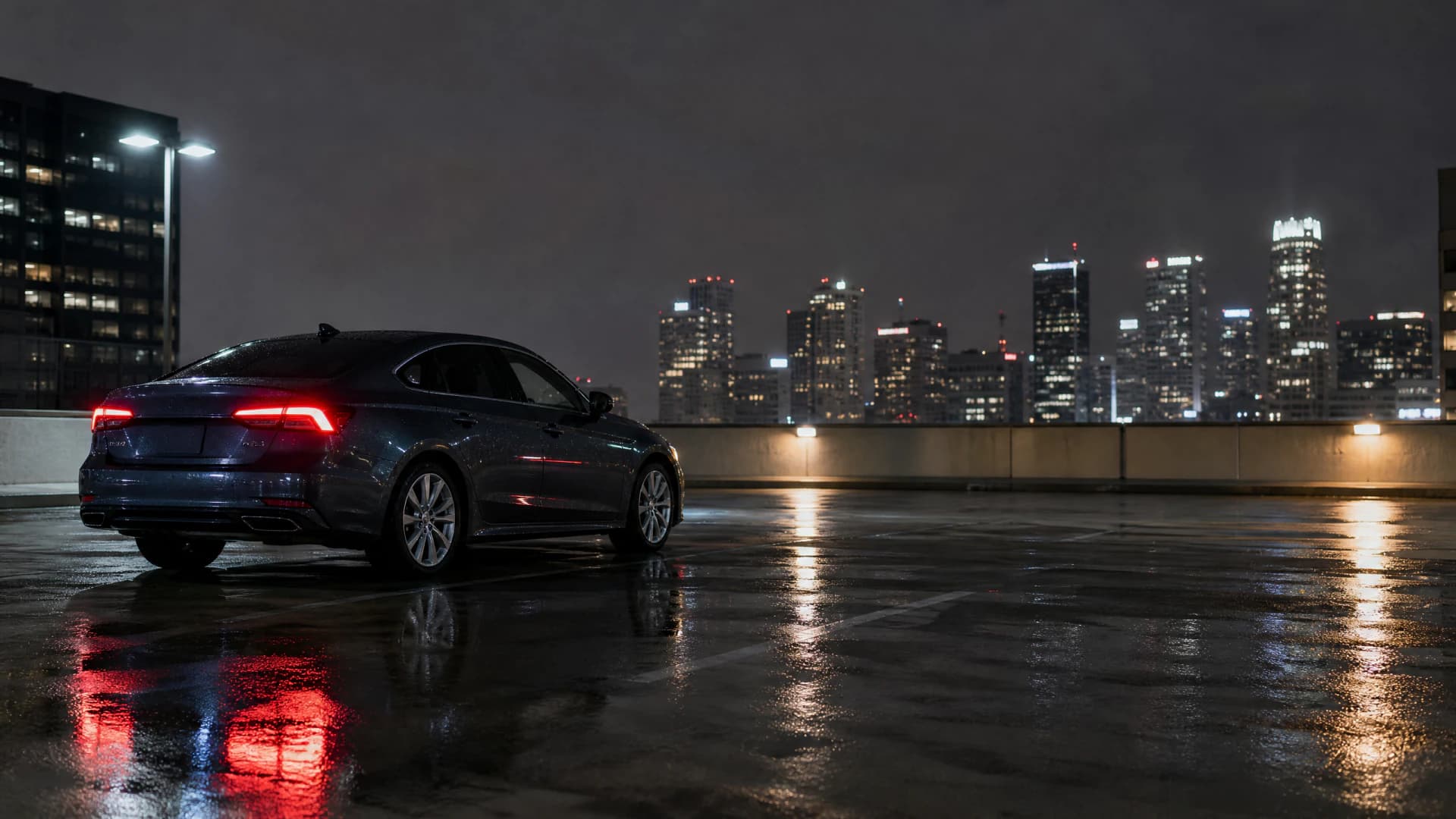
Dropping collision or comprehensive while a loan is active violates the loan contract. The lender can force-place coverage at a much higher premium and bill you directly.






How Oregon Households with Multiple Financed Vehicles Structure Coverage
Households insuring two or more financed vehicles must carry collision and comprehensive on every financed car to satisfy each lender's contract. The multi-car discount applies to the entire policy, but the lender's coverage requirements do not change — each financed vehicle needs full coverage regardless of how many cars sit on the policy.
One common mistake: dropping collision on an older financed vehicle because its value fell below the loan payoff amount. The lender does not care about the vehicle's current market value; the contract requires collision and comprehensive until the loan is paid in full. If the car is totaled and worth less than the loan balance, gap insurance covers the difference — but only if collision coverage was active at the time of the loss.
When one vehicle on a multi-car policy is paid off and another remains financed, you can drop collision and comprehensive on the paid-off car without affecting the financed vehicle's coverage. The lender monitors only the vehicle identified in their loan contract. Structuring coverage this way lowers the total premium while keeping each lender's requirements satisfied.
21 carriers
Oregon Multi-Car Policy Carriers
Twenty-one carriers write multi-vehicle policies in Oregon, including Allstate, American Family, Farmers, Geico, Progressive, State Farm, and USAA. Each carrier prices collision and comprehensive differently; comparing quotes across carriers often produces a lower total premium than staying with your current insurer.

When You Can Drop Full Coverage Without Lender Penalty
You can drop collision and comprehensive the day the loan is paid off. The lender releases their interest in the vehicle, and the loss payee designation on your policy no longer applies. Oregon law does not require you to carry collision or comprehensive on a paid-off vehicle — only the liability, personal injury protection, and uninsured motorist minimums remain mandatory.
Refinancing the loan does not change the coverage requirement. The new lender steps into the original lender's position and requires the same collision and comprehensive coverage. Lease buyouts work the same way — if you finance the buyout, the new lender requires full coverage until that loan is satisfied.
Compare Carriers to Lower Full Coverage Cost on Financed Vehicles
Collision and comprehensive premiums vary widely across carriers writing in Oregon. Households with multiple financed vehicles see the largest savings by comparing quotes annually, because the multi-car discount applies to the total policy premium including collision and comprehensive on every vehicle.
Request quotes from at least three carriers that write multi-vehicle policies in Oregon. Provide the loan contract's required deductible limits and ask each carrier to quote collision and comprehensive at those levels. Verify that the lender will be named as loss payee on the new policy before you switch — most carriers handle this automatically, but confirming in advance prevents a lapse notice. Oregon carriers writing multi-car policies with competitive collision and comprehensive rates include Geico, Progressive, State Farm, and USAA for eligible households.
What Happens When You Drop Full Coverage on a Financed Vehicle
Force-placed insurance is a policy the lender buys on your behalf to protect their interest in the vehicle. It covers only the lender's loss — collision damage that totals the car — and costs two to three times what you would pay for the same coverage through your own carrier. The lender bills you for the premium, adds it to your loan balance, and charges interest on it. You remain responsible for liability coverage separately, because force-placed policies do not cover your legal obligation to other drivers.
The lender can also declare the loan in default and accelerate the balance, demanding immediate payment in full. Most lenders escalate to acceleration only after repeated lapses or refusal to reinstate coverage, but the contract gives them that authority from the first day of non-compliance. Reinstatement requires proof of collision and comprehensive coverage meeting the contract's limits and deductible requirements, submitted to the lender's insurance verification department.
Get Your Free Quote
Get My Oregon Car Insurance QuoteFrequently Asked Questions
Does Oregon require full coverage on financed cars?
No. Oregon requires $25,000/$50,000/$20,000 liability, personal injury protection, and uninsured motorist coverage on every registered vehicle. Full coverage — liability plus collision and comprehensive — is a lender requirement written into the loan contract, not a state law.
What happens if I drop collision on a financed car in Oregon?
The lender receives electronic notice within days and initiates force-placed coverage at two to three times your current premium. The lender bills you for the force-placed policy, adds it to your loan balance, and can declare the loan in default if you refuse to reinstate coverage.
Can I drop full coverage when my car is paid off?
Yes. The day the loan is paid off, you can drop collision and comprehensive without penalty. Oregon law requires only liability, personal injury protection, and uninsured motorist coverage on paid-off vehicles.
Do I need full coverage on every car if I finance multiple vehicles?
Yes. Each lender requires collision and comprehensive on the vehicle securing their loan. If you finance three cars, all three need full coverage until their loans are satisfied, even if they sit on the same multi-car policy.
How do I lower full coverage cost on a financed car in Oregon?
Compare quotes from multiple carriers writing in Oregon. Request quotes from at least three carriers and verify the lender will be named as loss payee before switching.
Does refinancing a car loan change the full coverage requirement?
No. The new lender requires the same collision and comprehensive coverage the original lender required. The coverage obligation transfers to the new loan contract and remains in effect until the refinanced loan is paid off.