
Full Coverage Car Insurance Companies — Oregon
Free to compare
Why Full Coverage on Multiple Cars Changes the Carrier Decision
You own two or three cars, you want full coverage on each, and you assumed the multi-car discount would apply the same way across liability, collision, and comprehensive. It does not. Oregon carriers structure multi-vehicle discounts primarily around liability premiums—the state-mandated $25,000 per person, $50,000 per accident bodily injury, and $20,000 property damage minimums—but collision and comprehensive sit on separate rating schedules. When you add a second vehicle with full coverage, the discount on that car's collision premium may be smaller than the discount on its liability portion, or absent entirely, depending on the carrier's underwriting rules.
This matters because full coverage means you are paying for three coverage layers per vehicle: liability (state-mandated), collision (pays for damage to your car in an at-fault crash), and comprehensive (pays for theft, weather, vandalism). A carrier that offers a strong multi-car discount on liability but weak or no discount on collision can end up more expensive for a two-car household than a carrier with a smaller liability discount but better collision treatment. The comparison is not obvious from a single-vehicle quote, and most online tools show only the combined premium without breaking out how the discount applies to each coverage layer.
“A carrier with a smaller liability discount but better collision treatment can cost less for full coverage on two cars.”

See What Oregon Drivers Pay for the Coverage They Need
Get My Oregon Car Insurance Quote20 carriers
Oregon Multi-Car Full Coverage Writers
Allstate, American Family, Amica, Bristol West, Country Financial, CSAA, Dairyland, Farmers, GAINSCO, Geico, Hartford, Infinity, Kemper, Liberty Mutual, National General, Nationwide, Progressive, Root, State Farm, The General, Travelers, and USAA all write multi-vehicle policies in Oregon and offer collision and comprehensive on every vehicle. Carrier count drawn from Oregon carrier roster; all confirmed to write standard or non-standard auto with full coverage options.
Oregon carrier roster, verified Aug 2025
What Full Coverage Actually Requires in Oregon
Oregon law requires liability insurance at $25,000 per person and $50,000 per accident for bodily injury, plus $20,000 for property damage. The state also mandates personal injury protection (PIP) and uninsured motorist coverage on every policy. Those five components—bodily injury per person, bodily injury per accident, property damage, PIP, and uninsured motorist—are the minimum to register and legally drive.
Full coverage adds collision and comprehensive to that base. Collision pays to repair or replace your car after an at-fault crash, minus your deductible. Comprehensive pays for theft, hail, flood, fire, vandalism, and animal strikes, also minus your deductible. Neither collision nor comprehensive is required by Oregon law, but lienholders require both if you finance or lease. Even if you own the car outright, full coverage protects the asset—Oregon's vehicle theft rate sits at 296.5 per 100,000 population, and comprehensive is the only coverage that pays when your car is stolen.
When you insure two or more vehicles, every car on the policy must carry the same liability limits, but you can choose different collision and comprehensive deductibles per vehicle. A $500 deductible on your daily driver and a $1,000 deductible on a second car you drive less often is a common structure. The multi-car discount applies to the policy as a whole, but how it distributes across liability, collision, and comprehensive depends on the carrier's rating algorithm.
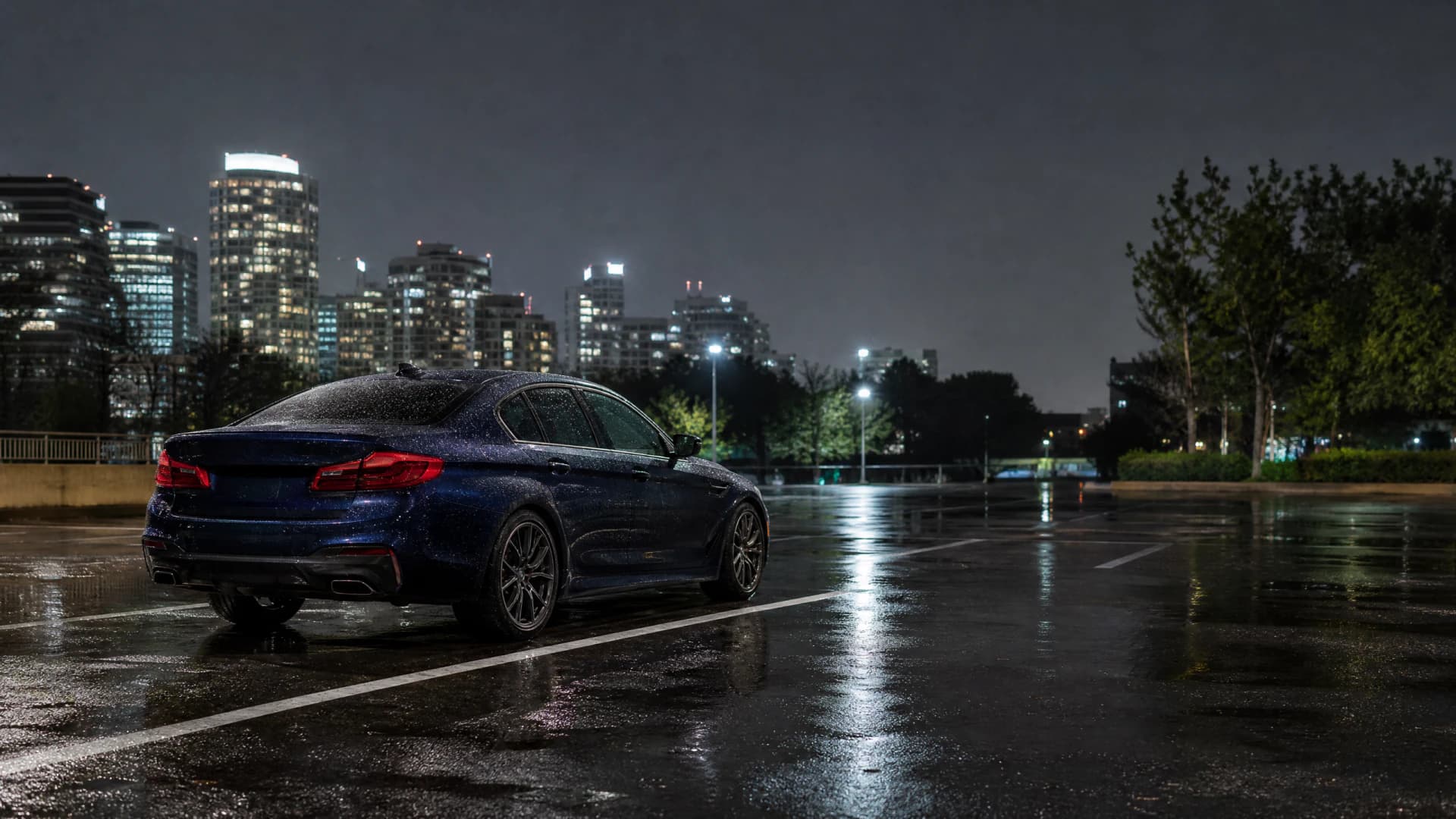
The multi-car discount typically saves more on liability than on collision, so a carrier with a smaller liability discount but better collision treatment can cost less for full coverage on two cars.
Related Articles




Which Oregon Carriers Write Multi-Car Full Coverage and How They Differ
State Farm, Geico, Progressive, Allstate, and USAA all write multi-vehicle policies in Oregon with full coverage options and offer online quoting. State Farm and USAA sit in the preferred tier, meaning they typically quote lower base rates for drivers with clean records and good credit. Geico, Progressive, and Allstate write both standard and non-standard, so they can quote households with a mix of clean and higher-risk drivers on the same policy. If one driver has a recent at-fault accident or ticket and another does not, these carriers can structure the policy to reflect both profiles without forcing the clean driver into a non-standard rate.
Farmers, American Family, Nationwide, Liberty Mutual, and Travelers also write multi-car full coverage in Oregon. Farmers and American Family operate through agent networks rather than direct online quoting, which can add flexibility for households with complex vehicle mixes—an older car you want to insure with liability only, a financed car requiring full coverage, and a classic car needing agreed-value coverage. Nationwide, Liberty Mutual, and Travelers offer online quoting and write both standard and non-standard, with Nationwide and Liberty Mutual known for flexible payment plans when insuring multiple vehicles increases the premium significantly.
Bristol West, Dairyland, GAINSCO, Infinity, Kemper, National General, and The General specialize in non-standard auto insurance and write multi-car policies for households with DUI convictions, suspended licenses, lapses in coverage, or multiple at-fault accidents. These carriers typically do not advertise a multi-car discount as prominently as standard carriers, but they do reduce the per-vehicle rate when you add a second or third car. If your household includes a driver with a violation, these carriers may quote lower combined premiums than a standard carrier that surcharges the entire policy for one driver's record.
$1,084.54
Oregon Average Annual Auto Premium
Oregon drivers paid an average of $1,084.54 per insured vehicle in 2023, according to NAIC data. This figure reflects all coverage types and driver profiles statewide. Multi-car policies typically cost less per vehicle than insuring each car separately, but the total household premium depends on the number of vehicles, coverage levels, and whether collision and comprehensive are included.
NAIC Auto Insurance Database Report 2023
How Adding Full Coverage to a Second Vehicle Re-Rates the Policy
When you add a second vehicle to an existing Oregon policy, the carrier re-rates the entire policy rather than simply adding a flat amount. The new premium reflects the combined liability exposure of both vehicles, the collision and comprehensive risk of the second car, and the multi-car discount applied to the new total. If your first car carries liability only and you add a second car with full coverage, the increase is not just the second car's full-coverage cost—it is the second car's cost minus the discount, plus any adjustment to the first car's premium now that the policy qualifies for the multi-vehicle rate.
This re-rating can produce surprises. A household that adds a newer, more expensive car as the second vehicle may see the collision and comprehensive premiums dominate the increase, especially if the carrier applies little or no multi-car discount to those coverages. Conversely, adding an older second car with liability only can lower the per-vehicle cost significantly, because the multi-car discount applies to both cars' liability premiums and the second car adds no collision or comprehensive cost. The timing matters: adding a vehicle mid-term triggers the re-rating immediately, and the carrier prorates the increase to the next renewal. Adding a vehicle at renewal lets you compare the new total premium across carriers before committing.
Compare Carriers That Discount Every Vehicle on One Policy
Oregon law does not regulate how carriers structure multi-car discounts, so the discount percentage, the coverages it applies to, and the number of vehicles required to qualify all vary by carrier. Most carriers require every vehicle to sit on the same policy and share a garaging address to qualify. A car titled to a household member on a separate policy does not count toward your multi-car discount, even if both policies are with the same carrier. If you and a spouse each have a separate policy and you want to combine them, you will need to cancel one policy and add both vehicles to the other, which triggers the re-rating described above.
When comparing carriers, request a quote that breaks out liability, collision, and comprehensive premiums per vehicle. This breakdown shows you how the multi-car discount distributes across coverage types and lets you compare the total cost accurately. If a carrier will not provide the breakdown, ask for the per-vehicle premium with and without collision and comprehensive—the difference reveals how much of the discount applies to full coverage versus liability alone. Oregon's 20 multi-car full-coverage carriers give you enough options to find one that discounts the coverages your household actually needs, not just the state-mandated minimums.
How Carriers Structure Multi-Car Full Coverage Discounts
Most carriers calculate the multi-car discount as a percentage reduction applied to each vehicle's base premium, but the percentage differs by coverage. Liability premiums—covering bodily injury and property damage—typically receive the largest discount, often in the range that carriers advertise. Collision and comprehensive premiums receive a smaller discount or none, because those coverages are priced on the vehicle's value, theft risk, and repair cost rather than the driver's liability exposure. A carrier that discounts liability by one amount may discount collision by half that or not at all.
When you add a second vehicle with full coverage, the policy premium increases by the second car's base liability, collision, and comprehensive costs, minus whatever discount applies to each layer. If the carrier applies a strong discount to liability but no discount to collision, and your second car is newer or more expensive to repair, the collision premium can dominate the increase. Comparing total premium without knowing how the discount splits can lead you to choose a carrier that looks cheaper on liability but costs more overall once collision and comprehensive are added.
Get Your Free Quote
Get My Oregon Car Insurance QuoteFrequently Asked Questions
Does the multi-car discount apply to collision and comprehensive in Oregon?
The multi-car discount applies to the policy as a whole, but carriers typically discount liability premiums more than collision and comprehensive. Some carriers apply little or no discount to collision and comprehensive because those coverages are priced on the vehicle's value and repair cost rather than liability exposure. Request a breakdown of the per-vehicle premium by coverage type to see how the discount distributes.
Can I insure two cars with different coverage levels on one Oregon policy?
Yes. Every vehicle on the policy must carry Oregon's minimum liability limits—$25,000 per person, $50,000 per accident bodily injury, and $20,000 property damage—plus PIP and uninsured motorist coverage. You can add collision and comprehensive to one car and not the other, and you can choose different deductibles per vehicle. The multi-car discount applies to the policy regardless of which cars carry full coverage.
Which Oregon carriers write multi-car policies for households with one high-risk driver?
Geico, Progressive, Allstate, Bristol West, Dairyland, GAINSCO, Infinity, Kemper, National General, and The General all write multi-car policies in Oregon for households with a mix of clean and high-risk drivers. These carriers can structure the policy to reflect both profiles without forcing the clean driver into a non-standard rate. Bristol West, Dairyland, GAINSCO, Infinity, Kemper, and The General specialize in non-standard auto and may quote lower combined premiums than standard carriers that surcharge the entire policy for one driver's record.
How does adding a financed car to an existing Oregon policy change the premium?
Adding a financed car requires collision and comprehensive coverage, which increases the premium more than adding a car with liability only. The carrier re-rates the entire policy when you add the vehicle, applying the multi-car discount to the new total. If the carrier applies a smaller discount to collision and comprehensive than to liability, the increase can be larger than expected. Request a quote that breaks out the per-vehicle premium by coverage type before adding the car.
Do I need to insure all household vehicles on the same Oregon policy to get the multi-car discount?
Yes. Most Oregon carriers require every vehicle to sit on the same policy and share a garaging address to qualify for the multi-car discount. A car titled to a household member on a separate policy does not count, even if both policies are with the same carrier. If you and a spouse each have a separate policy, you will need to cancel one and add both vehicles to the other to qualify for the discount.
What is the difference between full coverage and Oregon's minimum required insurance?
Oregon requires $25,000 per person and $50,000 per accident bodily injury liability, $20,000 property damage liability, personal injury protection, and uninsured motorist coverage. Full coverage adds collision and comprehensive to that base. Collision pays to repair your car after an at-fault crash; comprehensive pays for theft, weather, vandalism, and animal strikes. Neither is required by law, but lienholders require both if you finance or lease.