
Minimum Coverage Car Insurance — Oregon
Free to compare
What Oregon Actually Requires
You need three coverages to legally register and drive in Oregon: bodily injury liability ($25,000 per person, $50,000 per accident), property damage liability ($20,000 per accident), and both personal injury protection and uninsured motorist coverage. The state does not offer a liability-only option. Every policy must carry all three components.
Most drivers arrive thinking minimum coverage means liability only. Oregon's structure is different. The personal injury protection requirement covers your own medical expenses regardless of fault, and the uninsured motorist mandate protects you when another driver lacks coverage. These are not optional add-ons — they are part of the minimum.
“Oregon's minimum is not liability-only — every vehicle must carry PIP and uninsured motorist coverage to meet state law.”

See What Oregon Drivers Pay for the Coverage They Need
Get My Oregon Car Insurance Quote14.7%
Oregon Uninsured Motorist Rate
Nearly one in seven Oregon drivers operates without insurance. The state's mandatory uninsured motorist coverage exists because this rate is high enough that a crash with an uninsured driver is a real probability, not an edge case.
Insurance Research Council, 2023
How the Three-Part Minimum Works Across Multiple Vehicles
When you insure two or more vehicles on one policy, Oregon's minimum applies per vehicle, not per policy. Each car carries its own liability limit, its own PIP coverage, and its own uninsured motorist protection. The policy structure does not pool limits across vehicles.
A household with three cars needs $25,000/$50,000/$20,000 liability on each of the three vehicles. The total liability exposure is three times the per-vehicle minimum. Carriers price this as three separate coverage units, not as a single shared pool.
The multi-car discount reduces the combined premium, but it does not change the per-vehicle coverage requirement. Every vehicle on the policy must meet the state minimum independently. Dropping one vehicle to liability-only while keeping full coverage on another is allowed, but both still carry the three-part minimum Oregon mandates.
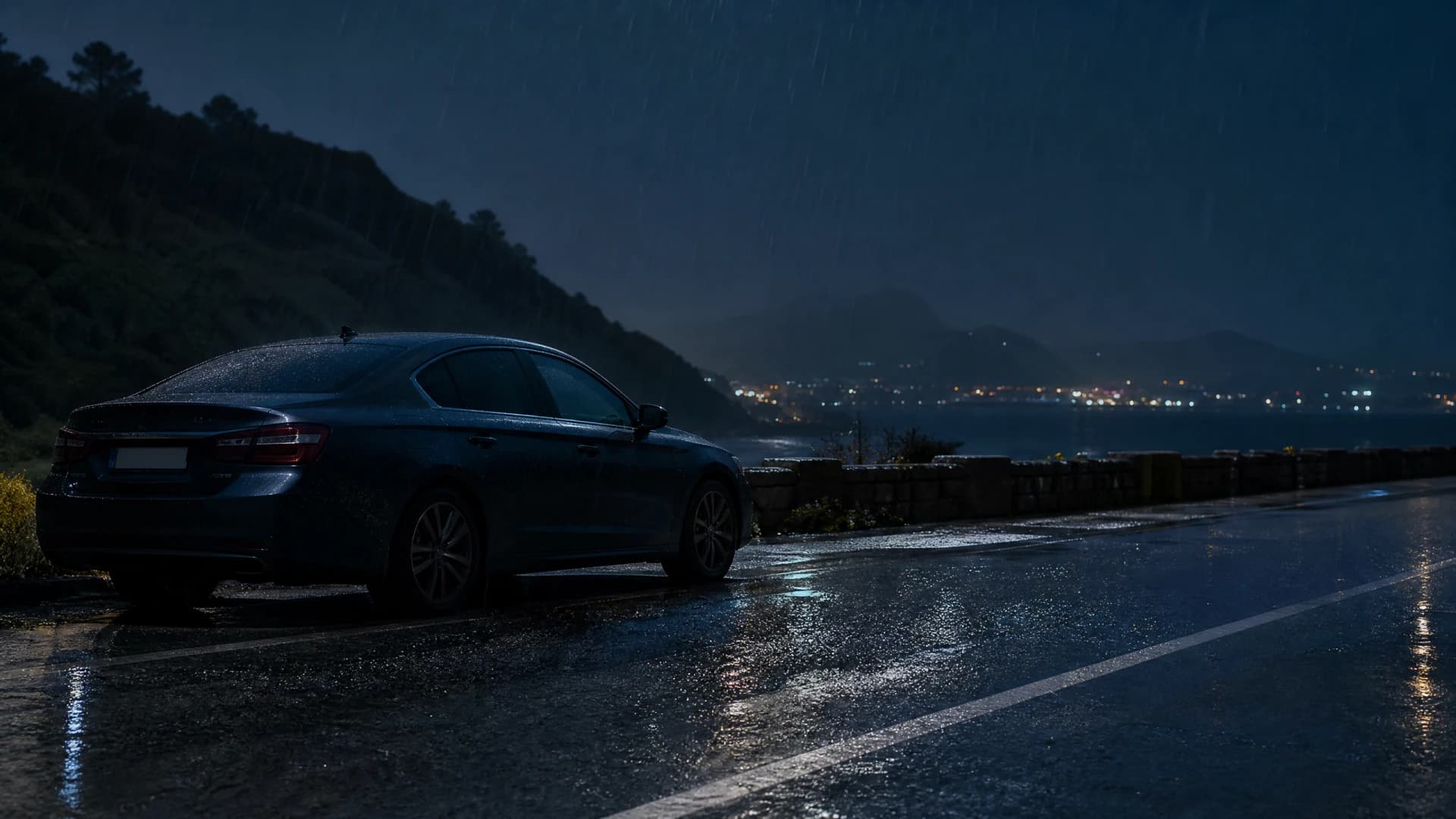
Oregon's minimum is not liability-only. Every vehicle must carry bodily injury liability, property damage liability, personal injury protection, and uninsured motorist coverage to meet state law.


When the Minimum Is Not Enough
Oregon's $25,000 bodily injury limit per person does not cover a serious injury. A multi-day hospital stay, surgery, or long-term rehabilitation easily exceeds $25,000. When your liability limit is exhausted, the injured party can sue you personally for the difference. Your assets — home equity, savings, wages — are at risk.
The $20,000 property damage limit does not cover a totaled luxury vehicle or a crash involving multiple cars. The minimum pays the first $20,000; you pay the rest.
Households with multiple vehicles face higher exposure. A crash involving one of your cars triggers the per-vehicle limit, not a pooled household limit. If you own three vehicles and one causes a serious crash, only that vehicle's $25,000/$50,000/$20,000 limit applies. The other two vehicles' limits do not stack.
$25,000 / $50,000 / $20,000
Oregon Minimum Liability Limits
Bodily injury liability must be at least $25,000 per person and $50,000 per accident. Property damage liability must be at least $20,000 per accident. These are the floor, not the ceiling — most households with multiple vehicles carry higher limits.
Oregon Department of Transportation, Driver and Motor Vehicle Services Division

How Carriers Structure Multi-Vehicle Minimum Coverage Policies
Carriers in Oregon write multi-vehicle policies as a single contract covering every vehicle the household owns or regularly drives. Each vehicle is a separate line item with its own coverage selections. You can choose minimum coverage on one vehicle and higher limits on another, but both must meet Oregon's three-part minimum.
The multi-car discount applies to the combined premium after each vehicle's coverage is priced. The discount does not reduce the per-vehicle coverage requirement. A household with two vehicles on minimum coverage pays less than two separate policies with the same coverage, but both vehicles still carry $25,000/$50,000/$20,000 liability, PIP, and uninsured motorist protection.
Compare Carriers That Write Multi-Vehicle Policies in Oregon
Oregon has 25 carriers writing auto insurance in the state. Not all write multi-vehicle policies with the same discount structure or the same willingness to insure households with multiple cars. Allstate, American Family, Farmers, Geico, Progressive, State Farm, and USAA all write multi-vehicle policies in Oregon and offer multi-car discounts. Bristol West, Dairyland, GAINSCO, Infinity, Kemper, National General, and The General write non-standard policies and accept households with higher-risk drivers or older vehicles.
When you compare carriers, confirm that each quote reflects Oregon's three-part minimum: bodily injury liability, property damage liability, personal injury protection, and uninsured motorist coverage. A quote that omits PIP or uninsured motorist coverage does not meet state law. Request quotes for every vehicle you plan to insure on one policy. The multi-car discount applies only when all vehicles sit on the same policy with the same effective date.
What Each Component Covers
Bodily injury liability pays medical expenses, lost wages, and legal costs when you injure someone in a crash you caused. The $25,000 per person limit covers one injured person; the $50,000 per accident limit is the maximum the policy pays when multiple people are hurt. Property damage liability pays repair costs when you damage another driver's vehicle or property. The $20,000 limit applies per accident.
Personal injury protection covers your own medical expenses, lost wages, and funeral costs regardless of who caused the crash. Oregon requires PIP because it is a tort state with no-fault medical coverage layered in. Uninsured motorist coverage pays your medical bills and vehicle damage when an uninsured or underinsured driver hits you. Given Oregon's 14.7% uninsured rate, this coverage activates more often than most drivers expect.
Get Your Free Quote
Get My Oregon Car Insurance QuoteFrequently Asked Questions
What is the minimum car insurance required in Oregon?
Oregon requires $25,000 bodily injury liability per person, $50,000 per accident, $20,000 property damage liability per accident, personal injury protection, and uninsured motorist coverage. All five components are mandatory. Liability-only policies do not meet Oregon law.
Does Oregon require personal injury protection?
Yes. Oregon mandates personal injury protection on every auto insurance policy. PIP covers your own medical expenses, lost wages, and funeral costs regardless of who caused the crash. You cannot waive PIP in Oregon.
Can I insure multiple cars on one policy in Oregon?
Yes. Oregon carriers write multi-vehicle policies covering two or more cars on one contract. Each vehicle must meet the state's three-part minimum independently. The multi-car discount applies to the combined premium but does not reduce the per-vehicle coverage requirement.
What happens if I drive without insurance in Oregon?
Oregon suspends your license and registration immediately. You must maintain the SR-22 for three years. Driving during suspension adds criminal penalties.
Is uninsured motorist coverage required in Oregon?
Yes. Oregon requires uninsured motorist coverage on every policy. Given that 14.7% of Oregon drivers operate without insurance, this coverage protects you when an uninsured or underinsured driver causes a crash. You cannot waive it.
How do I prove insurance in Oregon?
Oregon accepts electronic proof of insurance on your phone or a printed insurance card. The proof must show your name, policy number, coverage effective dates, and the vehicle identification number. Carriers issue proof immediately when you bind a policy.