
What Affects Car Insurance Rates — Oregon
Free to compare
Why Adding a Vehicle Changes Your Entire Premium
You added a second or third vehicle to your Oregon policy and the premium increase was larger than you expected. The new car's premium didn't simply add to the old total — the entire policy re-rated. Oregon requires personal injury protection (PIP) and uninsured motorist coverage on every vehicle, and carriers recalculate the combined household risk profile when a vehicle joins the policy. The multi-car discount applies, but it doesn't offset the mandatory coverage expansion across all vehicles.
This article explains exactly what drives your Oregon multi-vehicle premium: the state-mandated coverages that apply to every car, how the multi-car discount actually works, and the household factors that re-rate your policy when you add or remove a vehicle. You'll see why combining two policies after marriage or a household move sometimes costs more than keeping them separate, and what you control when structuring coverage across multiple cars.
“Oregon's mandatory PIP and uninsured motorist requirements mean adding a vehicle always expands coverage across the household, not just for the new car.”

See What Oregon Drivers Pay for the Coverage They Need
Get My Oregon Car Insurance Quote$25,000 / $50,000 / $20,000
Oregon Minimum Liability Limits
Oregon requires $25,000 bodily injury per person, $50,000 per accident, and $20,000 property damage. These minimums apply to every vehicle on your policy, but PIP and uninsured motorist coverage — also mandatory — add the larger share of premium for most households.
Oregon Department of Motor Vehicles
State-Mandated Coverages That Apply to Every Vehicle
Oregon law requires four coverages on every registered vehicle: bodily injury liability ($25,000 per person, $50,000 per accident), property damage liability ($20,000), personal injury protection (PIP), and uninsured motorist coverage. The liability minimums are the floor; PIP and uninsured motorist are the structural difference. PIP pays your medical expenses and lost wages after a crash regardless of fault. Uninsured motorist coverage pays when the at-fault driver has no insurance or insufficient limits. Both are mandatory, and both apply per vehicle.
When you add a second or third car, the carrier extends PIP and uninsured motorist to that vehicle and re-rates the household. A household with three vehicles carries three sets of PIP and uninsured motorist coverage. The multi-car discount reduces the combined premium, but it does not eliminate the mandatory coverage expansion. Carriers writing in Oregon include State Farm, Progressive, GEICO, Farmers, Allstate, USAA, Nationwide, and Liberty Mutual, among others. Each structures the multi-car discount differently, and each prices PIP and uninsured motorist based on household claims history and vehicle use.
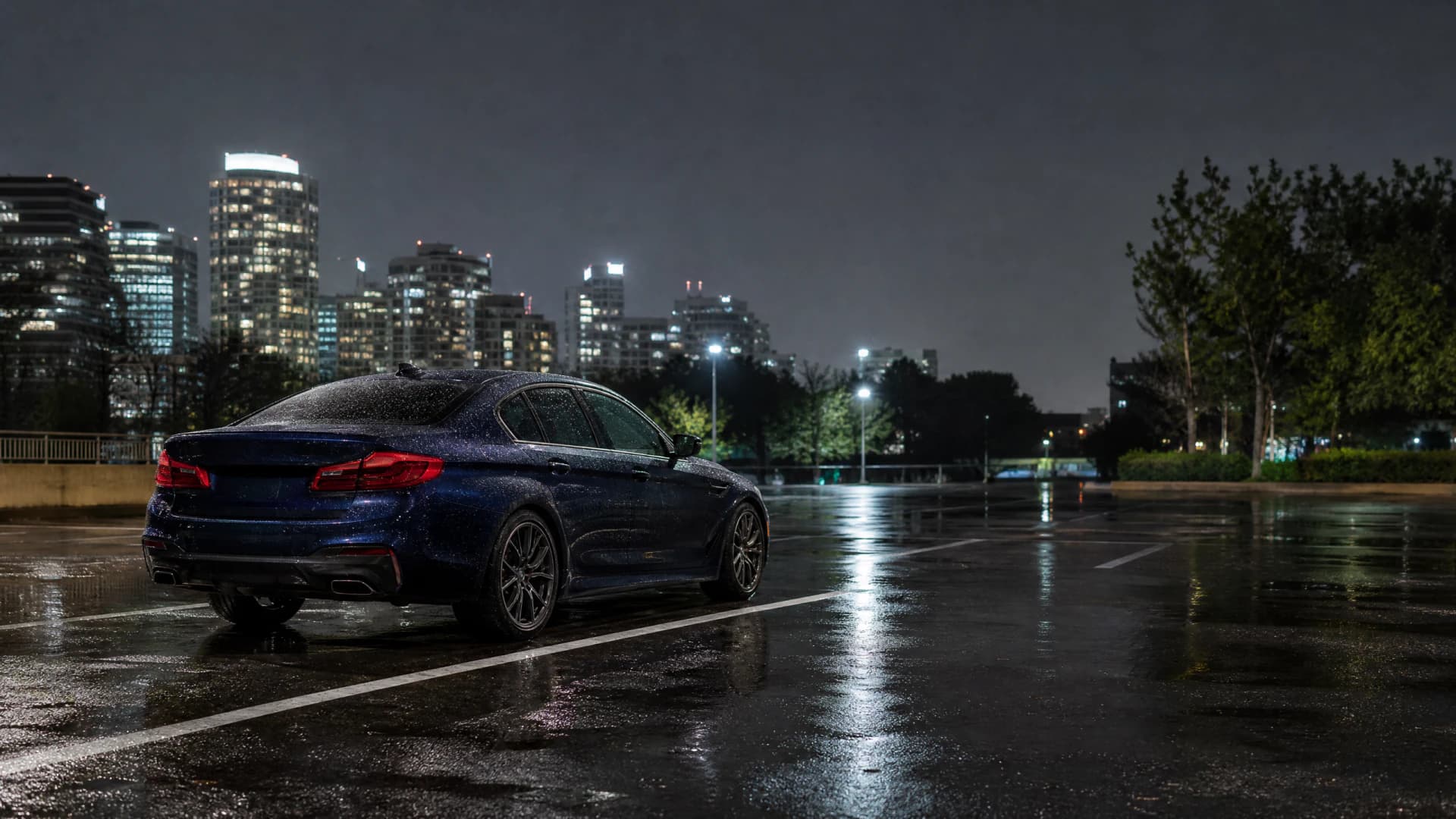
The multi-car discount applies to the total premium, but Oregon's mandatory PIP and uninsured motorist requirements mean adding a vehicle always expands coverage — and cost — across the household.





Household Factors That Re-Rate Your Policy
Oregon carriers price multi-vehicle policies based on household composition: the number of licensed drivers, their ages, their driving records, and which driver is assigned to which vehicle. Adding a teenage driver to a household with three vehicles re-rates the entire policy, because the carrier assumes the teen has access to all three cars unless you explicitly exclude them from specific vehicles. Excluding a driver reduces the teen's premium impact but means that driver cannot legally operate the excluded vehicle.
Marrying or moving in with someone who has their own vehicle and policy creates a decision point. Combining the policies qualifies for the multi-car discount, but the carrier re-rates both vehicles based on the combined household's driving records, ages, and claims history. If one spouse has a recent at-fault accident or a ticket, the combined premium may exceed the sum of the two separate premiums. Keeping the policies separate avoids the combined re-rating but forfeits the multi-car discount.
Garaging address matters. Oregon carriers price policies based on ZIP code theft rates, accident frequency, and uninsured motorist rates. Moving from a rural county to Portland re-rates your policy upward; moving from Portland to a rural area re-rates it downward. If you garage one vehicle at a second address — a college student's car at a dorm, or a work vehicle at a job site — the carrier prices that vehicle based on the secondary garaging ZIP, not your primary address.
Vehicle use and annual mileage affect pricing. A car driven 5,000 miles per year for errands costs less to insure than one driven 15,000 miles per year for commuting. When you add a rarely-driven vehicle to a multi-car policy, declare its actual annual mileage. Overstating mileage costs you money; understating it and filing a claim can trigger a coverage dispute.
14.7%
Oregon Uninsured Motorist Rate
14.7% of Oregon drivers carry no insurance. This rate drives uninsured motorist coverage pricing — a mandatory coverage on every vehicle. Carriers price UM coverage higher in counties with above-average uninsured rates.
Insurance Research Council, 2023

Coverage Decisions That Change Your Premium
Oregon requires liability, PIP, and uninsured motorist coverage, but collision and comprehensive are optional. Collision pays to repair your vehicle after a crash regardless of fault; comprehensive pays for theft, vandalism, weather damage, and animal strikes. Both carry deductibles — typically $500 or $1,000. Dropping collision and comprehensive on an older vehicle with low market value reduces your premium, but you pay out of pocket if that vehicle is damaged or stolen. A common threshold: if the vehicle's value is less than ten times the annual collision and comprehensive premium, consider dropping both.
Raising your deductible from $500 to $1,000 lowers your collision and comprehensive premium but increases your out-of-pocket cost at claim time. Households with multiple vehicles sometimes carry higher deductibles on rarely-driven cars and lower deductibles on daily drivers. This structures the household's coverage to match actual risk and budget.
Compare Carriers That Write Multi-Vehicle Policies in Oregon
Carriers writing multi-vehicle policies in Oregon include State Farm, Progressive, GEICO, Farmers, Allstate, USAA, Nationwide, Liberty Mutual, American Family, Travelers, and others. Each prices the multi-car discount differently, and each weighs household factors — driver ages, records, vehicle types, garaging ZIP — in its own underwriting model. One carrier's best rate for a two-vehicle household may not be its best rate for a four-vehicle household.
Request quotes from at least three carriers and compare the combined household premium after the multi-car discount applies. Verify that each quote includes Oregon's mandatory PIP and uninsured motorist coverages at the limits you choose. Ask whether the carrier offers usage-based or mileage-based pricing for rarely-driven vehicles — some carriers discount low-mileage cars more aggressively than others. Use the comparison tool on this site to see carriers writing in Oregon and structure your household's coverage to match your actual vehicle use and budget.
How the Multi-Car Discount Works in Oregon
Most carriers require every vehicle to sit on the same policy and share a garaging address to qualify for the multi-car discount. A vehicle titled to a household member on a separate policy does not count toward the same-policy requirement. When you combine two policies after marriage or a household move, the carrier re-rates both vehicles together, applies the multi-car discount, and prices the mandatory PIP and uninsured motorist coverages for the combined household. The discount percentage varies by carrier — some advertise larger discounts but start from higher base rates, while others offer smaller discounts on lower base premiums.
The structural reality: a smaller discount on a lower base rate can produce a lower combined premium than a larger discount on a higher one. When you add a vehicle mid-term, the carrier re-rates the policy immediately rather than waiting until renewal. The new vehicle's mandatory coverages apply from the date you add it, and the multi-car discount recalculates across all vehicles. If you remove a vehicle, the discount recalculates again, and your per-vehicle premium may increase even though you're insuring fewer cars.
Get Your Free Quote
Get My Oregon Car Insurance QuoteFrequently Asked Questions
Does the multi-car discount apply if my spouse and I keep separate policies?
No. The multi-car discount requires every vehicle to sit on the same policy. Two separate policies — even at the same address — do not qualify. Combining the policies applies the discount but re-rates both vehicles based on the combined household's driving records and claims history.
Why did my premium increase when I added a third vehicle if I got the multi-car discount?
Oregon requires PIP and uninsured motorist coverage on every vehicle. Adding a third car extends those mandatory coverages to the new vehicle and re-rates the household. The multi-car discount reduces the combined premium, but it does not eliminate the cost of the additional mandatory coverages.
Can I exclude a teenage driver from one of my vehicles to lower my premium?
Yes. Excluding a driver from a specific vehicle reduces that driver's premium impact, but the excluded driver cannot legally operate that vehicle. If they do and file a claim, the carrier will deny coverage. Use exclusions only when the driver genuinely will not drive the excluded car.
Does garaging a vehicle at a second address change my premium?
Yes. Carriers price each vehicle based on its garaging ZIP code. A car garaged at a college dorm or a work site in a different county is priced based on that location's theft rate, accident frequency, and uninsured motorist rate, not your primary address.
Should I drop collision and comprehensive on an older vehicle?
If the vehicle's market value is less than ten times the annual collision and comprehensive premium, dropping both coverages often makes sense. You save the premium but pay out of pocket if the vehicle is damaged or stolen. Keep liability, PIP, and uninsured motorist — those are mandatory in Oregon.
Do all carriers in Oregon offer the same multi-car discount?
No. Each carrier structures the multi-car discount differently. Some advertise larger percentage discounts but start from higher base rates; others offer smaller discounts on lower base premiums. Compare the final combined household premium after the discount applies, not the discount percentage alone.