
Car Insurance Rates — Oregon
Free to compare
What Drives Multi-Car Rates in Oregon
You added a second or third vehicle to your Oregon policy and the premium jumped more than you expected. The multi-car discount appeared, but the total still climbed sharply. Oregon's mandatory coverage structure explains why: every vehicle on your policy must carry personal injury protection (PIP) and uninsured motorist coverage, not just liability. Those requirements stack per vehicle before any discount reduces the combined premium.
Most states require only liability coverage to register a car. Oregon adds two mandatory coverages on top: PIP pays medical expenses for you and your passengers regardless of fault, and uninsured motorist coverage protects you when the other driver has no insurance or insufficient limits. Both coverages apply to each vehicle on the policy. A household insuring three cars pays the base cost of PIP and uninsured motorist protection three times over, then receives the multi-car discount on the combined total.
“Oregon requires PIP and uninsured motorist coverage on every vehicle, stacking the cost before any multi-car discount applies.”

See What Oregon Drivers Pay for the Coverage They Need
Get My Oregon Car Insurance Quote$25,000 / $50,000 / $20,000
Oregon Minimum Liability Limits
Oregon requires $25,000 bodily injury per person, $50,000 bodily injury per accident, and $20,000 property damage. These minimums apply to every vehicle on your policy, but PIP and uninsured motorist coverage sit on top of them.
Oregon DMV
How Mandatory PIP and Uninsured Motorist Coverage Stack Across Vehicles
Oregon law requires every registered vehicle to carry PIP and uninsured motorist coverage at the same limits as your liability coverage. You cannot decline them, and you cannot carry them on only one vehicle when you insure multiple cars. The carrier prices each vehicle's PIP and uninsured motorist coverage separately, then applies the multi-car discount to the combined policy premium.
A single-car policy pays one PIP premium and one uninsured motorist premium. A three-car policy pays three of each. The multi-car discount typically reduces the combined premium by a percentage, but that percentage applies after the mandatory coverages are priced per vehicle. The discount does not eliminate the stacking effect: it reduces the total, but the floor is higher than in states where only liability is required.
Households moving to Oregon from states without mandatory PIP or uninsured motorist requirements often underestimate the premium for a second or third vehicle. The liability-only comparison does not capture the full cost. Oregon's 14.7% uninsured motorist rate and high alcohol-impaired fatality percentage (34% of traffic deaths in 2023) explain why the state mandates these coverages, but they raise the cost of insuring every additional vehicle on your policy.
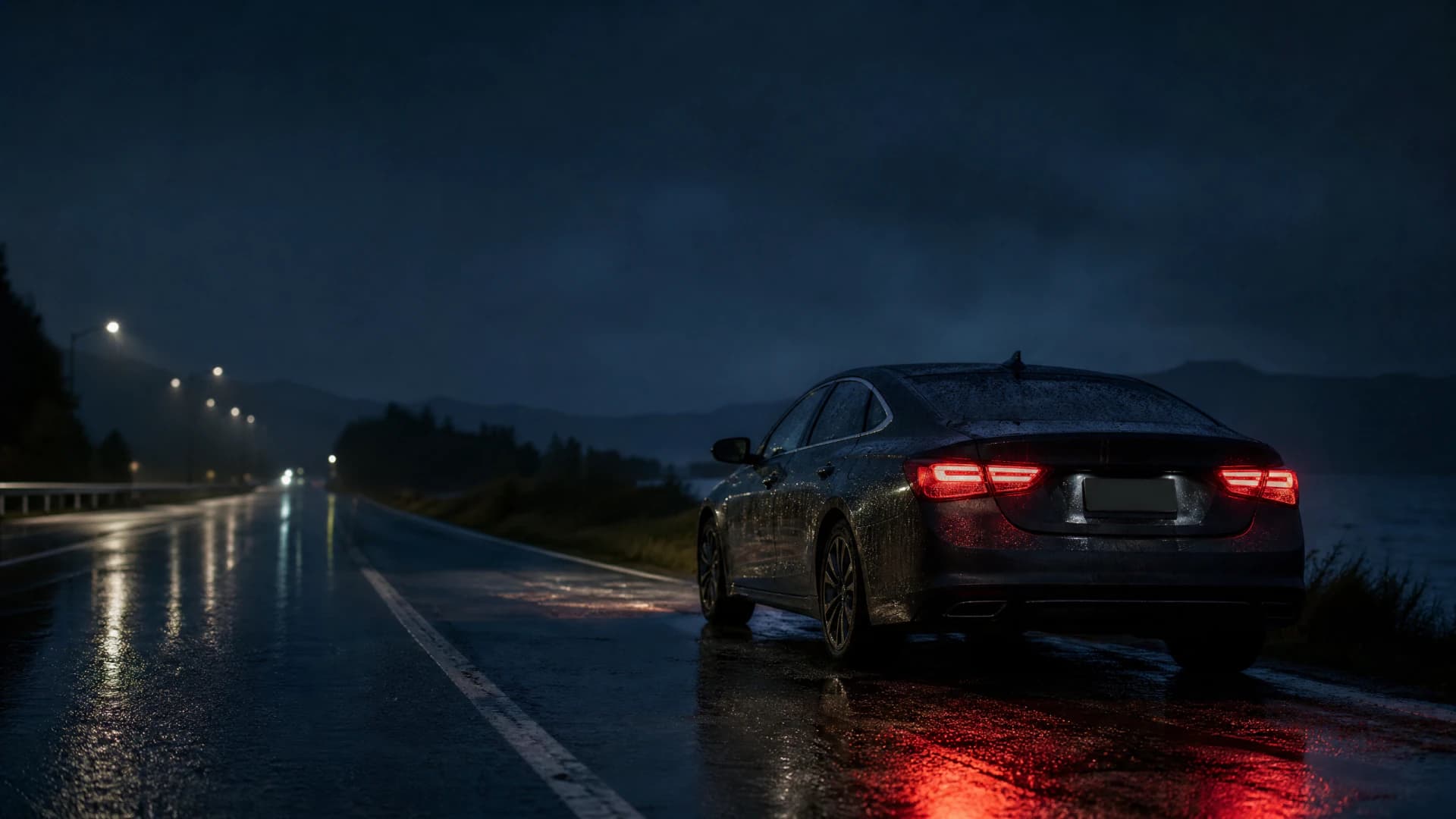
Oregon requires PIP and uninsured motorist coverage on every vehicle. You cannot opt out or carry them on only one car when insuring multiple vehicles.




How Adding a Vehicle Re-Rates the Entire Policy
Adding a vehicle to an existing Oregon policy does not simply append a flat amount to your current premium. The carrier re-rates the entire policy: it recalculates the premium for every vehicle on the policy, applies the multi-car discount to the new total, and issues a new premium. The new premium reflects the combined risk of all vehicles, not just the added car.
Carriers re-rate because the multi-car discount percentage often increases with the number of vehicles. A two-car policy might receive a 10% discount; a three-car policy might receive 15%. The carrier recalculates the base premium for all three vehicles, applies the larger discount, and the result can be lower per vehicle than the two-car rate, even though the total premium rises. This is why adding a low-value third car sometimes costs less per month than expected: the discount on the first two vehicles offsets part of the third car's cost.
Re-rating also means that changes to any vehicle on the policy affect the premium for all vehicles. If you add a teenage driver to one car, the carrier re-rates the entire policy and the premium for every vehicle rises, not just the car the teen drives. If you drop collision coverage on an older vehicle, the carrier re-rates the policy and the premium for the remaining vehicles may fall slightly due to the lower combined risk. Oregon carriers re-rate at every policy change, not just at renewal.
Most Oregon carriers allow you to add a newly purchased vehicle online or by phone and provide immediate proof of insurance. The carrier extends coverage to the new vehicle automatically for a grace period (typically 14 to 30 days, depending on the carrier), but you must report the vehicle within that window to avoid a coverage gap. If you do not report the vehicle before the grace period expires, the carrier can deny a claim on the unreported car even though your policy remained active.
14.7%
Oregon Uninsured Motorist Rate
Nearly 15% of Oregon drivers carry no insurance. Uninsured motorist coverage is mandatory on every vehicle for this reason: it pays your medical expenses and vehicle damage when the at-fault driver has no coverage.
Insurance Information Institute, 2023
When Separate Policies Cost Less Than One Combined Policy
A single policy covering all household vehicles usually costs less than separate policies for each car, but not always. Households with a high-risk driver and several low-risk drivers sometimes pay less by isolating the high-risk driver on a separate policy. Oregon carriers price each driver's risk individually and assign each driver to specific vehicles on the policy. If one driver has a DUI or multiple violations, that driver's risk raises the premium for every vehicle on the policy, even cars that driver never operates.
Splitting the household into two policies—one for the high-risk driver and their vehicle, one for the remaining drivers and vehicles—removes the high-risk driver's surcharge from the low-risk vehicles. The high-risk policy costs more per vehicle, but the low-risk policy costs significantly less, and the combined total can fall below the single-policy premium. This structure works only when the high-risk driver has their own vehicle titled in their name and garaged at a separate address, or when the carrier allows separate policies at the same address. Not all Oregon carriers permit separate policies for drivers at the same address; those that do often require proof that the drivers maintain separate finances or that the vehicles are titled separately.
Compare Carriers That Write Your Household's Vehicles
Oregon's mandatory PIP and uninsured motorist requirements raise the floor for every vehicle on your policy, but the size of the multi-car discount and the base rate per vehicle vary widely across carriers. A carrier with a low base rate and a small discount can beat a carrier with a high base rate and a large discount. The only way to know which structure costs less for your household is to compare quotes from multiple carriers that write policies for your vehicle count, driver mix, and coverage needs.
Request quotes from at least three carriers: one standard-tier carrier (State Farm, Allstate, Progressive, Geico), one direct carrier with competitive online rates (Progressive, Geico, Root), and one non-standard carrier if your household includes a driver with violations or a lapse (Bristol West, Dairyland, The General). Provide identical coverage selections to each carrier—same liability limits, same PIP and uninsured motorist limits, same deductibles—so the quotes reflect the carrier's rate structure, not different coverage levels. Oregon requires PIP and uninsured motorist coverage on every vehicle, so verify that every quote includes them before comparing totals.
Which Carriers Write Multi-Car Policies in Oregon
Standard-tier carriers writing Oregon multi-car policies include State Farm, Allstate, Progressive, Geico, Liberty Mutual, Nationwide, and Travelers. These carriers typically offer the largest multi-car discounts and write policies for households with two to four vehicles. State Farm and Allstate maintain the largest agent networks in Oregon; Progressive and Geico offer direct online quoting. USAA writes multi-car policies for military-affiliated households and consistently ranks among the lowest-cost carriers for multi-vehicle families, but eligibility is restricted to service members, veterans, and their families.
Non-standard carriers writing Oregon multi-car policies include Bristol West, Dairyland, The General, Infinity, and GAINSCO. These carriers write policies for drivers with violations, lapses, or non-standard risk profiles and often accept households with more than four vehicles or mixed-risk drivers. Bristol West and Dairyland require broker placement; The General, Infinity, and GAINSCO offer direct online quotes. Non-standard carriers price each vehicle individually and apply smaller multi-car discounts than standard-tier carriers, but they write policies standard carriers decline.
Get Your Free Quote
Get My Oregon Car Insurance QuoteFrequently Asked Questions
Does Oregon require PIP and uninsured motorist coverage on every vehicle?
Yes. Oregon law requires personal injury protection (PIP) and uninsured motorist coverage on every registered vehicle. You cannot decline these coverages or carry them on only one vehicle when you insure multiple cars. Both coverages are priced per vehicle, then the multi-car discount applies to the combined policy premium.
How much does adding a second car to an Oregon policy cost?
Adding a second vehicle re-rates your entire policy rather than adding a flat amount. The carrier recalculates the premium for both vehicles, applies the multi-car discount to the new total, and issues a new premium. The increase depends on the added vehicle's value, the driver assigned to it, and the size of the multi-car discount your carrier offers.
Which Oregon carriers offer the largest multi-car discounts?
Standard-tier carriers such as State Farm, Allstate, Progressive, and Geico typically offer the largest multi-car discounts in Oregon, often increasing the discount percentage as you add more vehicles. USAA offers competitive multi-car rates for military-affiliated households. Compare quotes from multiple carriers to see which discount structure costs least for your household's vehicle count and driver mix.
Can I insure multiple cars on separate policies in Oregon?
Yes, but most households pay less with one combined policy. Separate policies make sense when isolating a high-risk driver on their own policy lowers the combined total. Not all Oregon carriers allow separate policies for drivers at the same address; those that do often require proof of separate finances or separately titled vehicles.
How long do I have to add a newly purchased vehicle to my Oregon policy?
Most Oregon carriers extend automatic coverage to a newly purchased vehicle for 14 to 30 days, depending on the carrier. You must report the vehicle within that grace period to avoid a coverage gap. If you do not report the vehicle before the grace period expires, the carrier can deny a claim on the unreported car.
Do I need SR-22 filing to insure multiple cars in Oregon?
Only if the state has ordered you to file an SR-22 certificate due to a violation, suspension, or conviction. SR-22 is not a coverage type; it is proof that you carry at least Oregon's minimum liability, PIP, and uninsured motorist coverage. If you need SR-22 filing, it applies to your policy as a whole, not to individual vehicles.